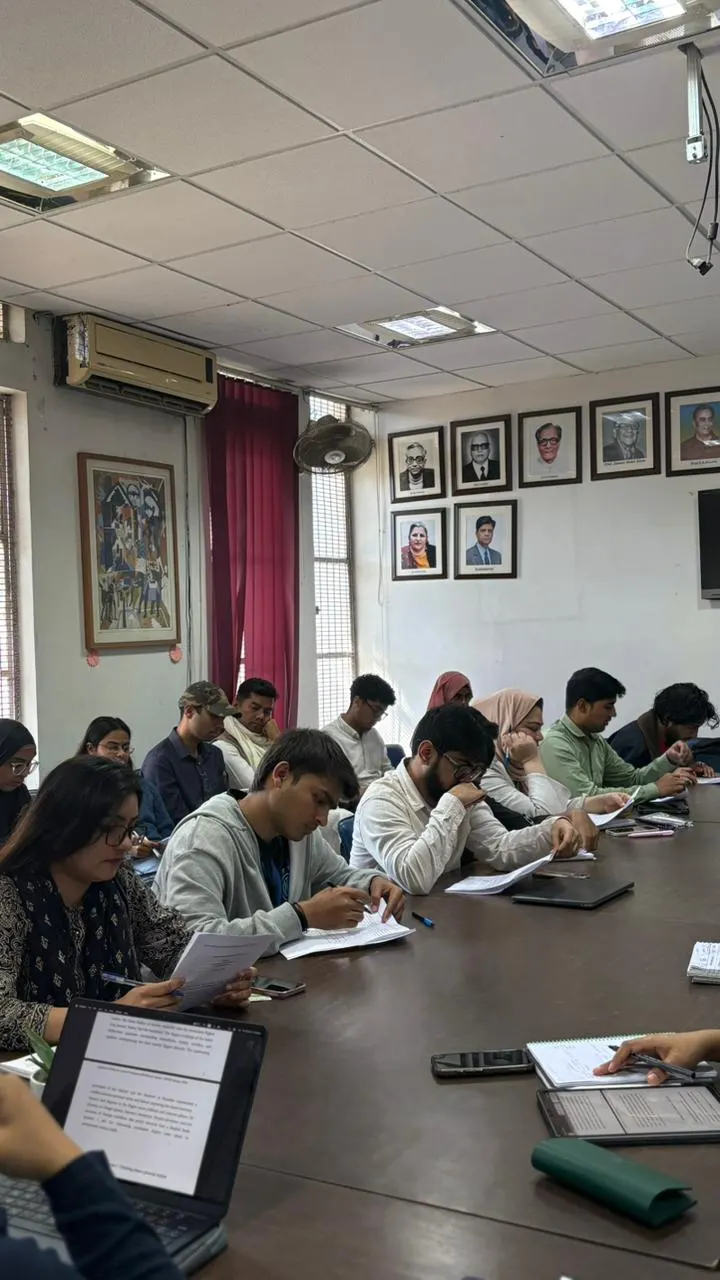
Workshop on Academic Writing for Journal Publication
13 February 2026, 10 am · Dr. Shivani Kapoor, Centre for the Study of Developing Societies (CSDS) (opens in a new tab)
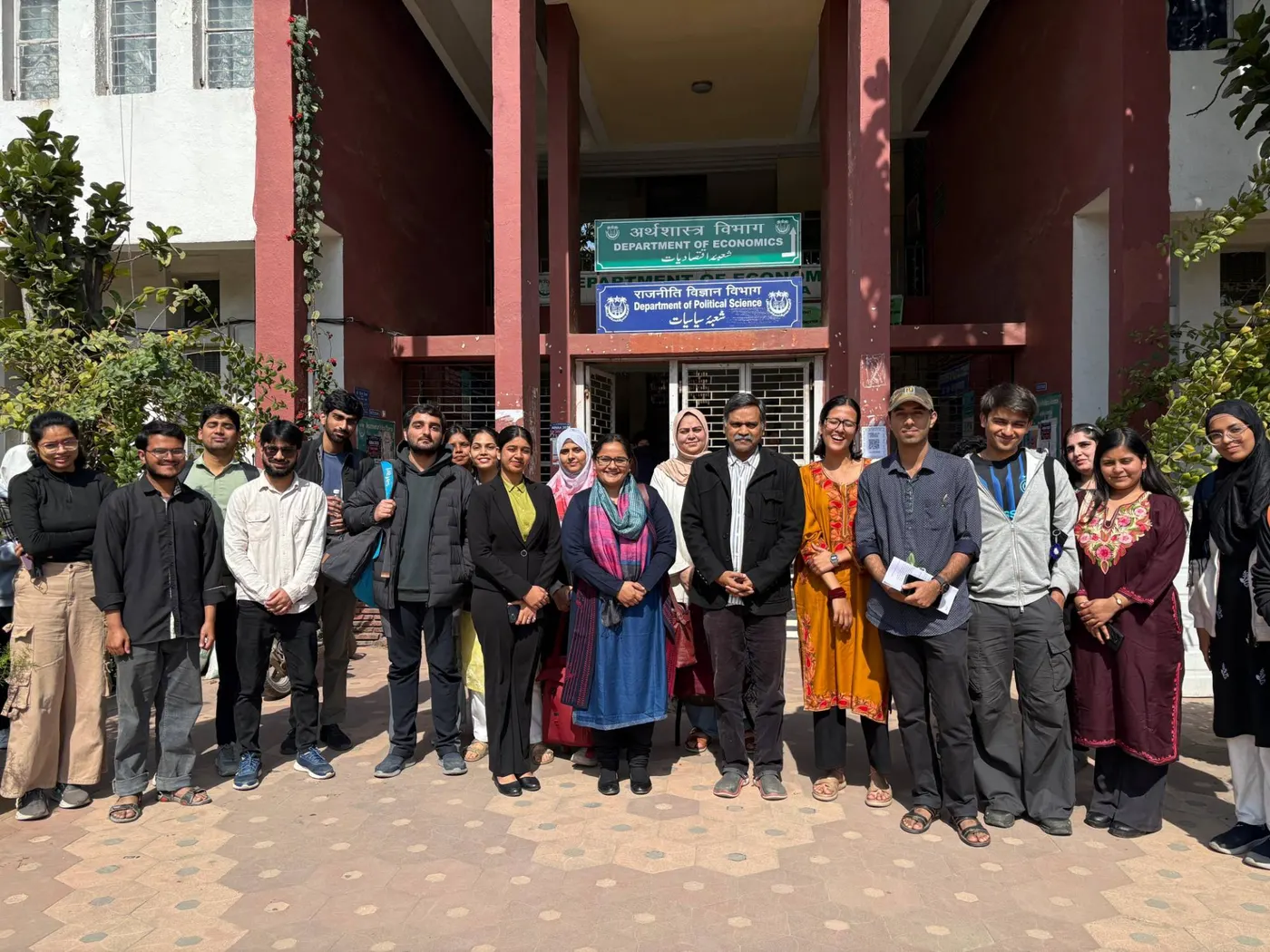
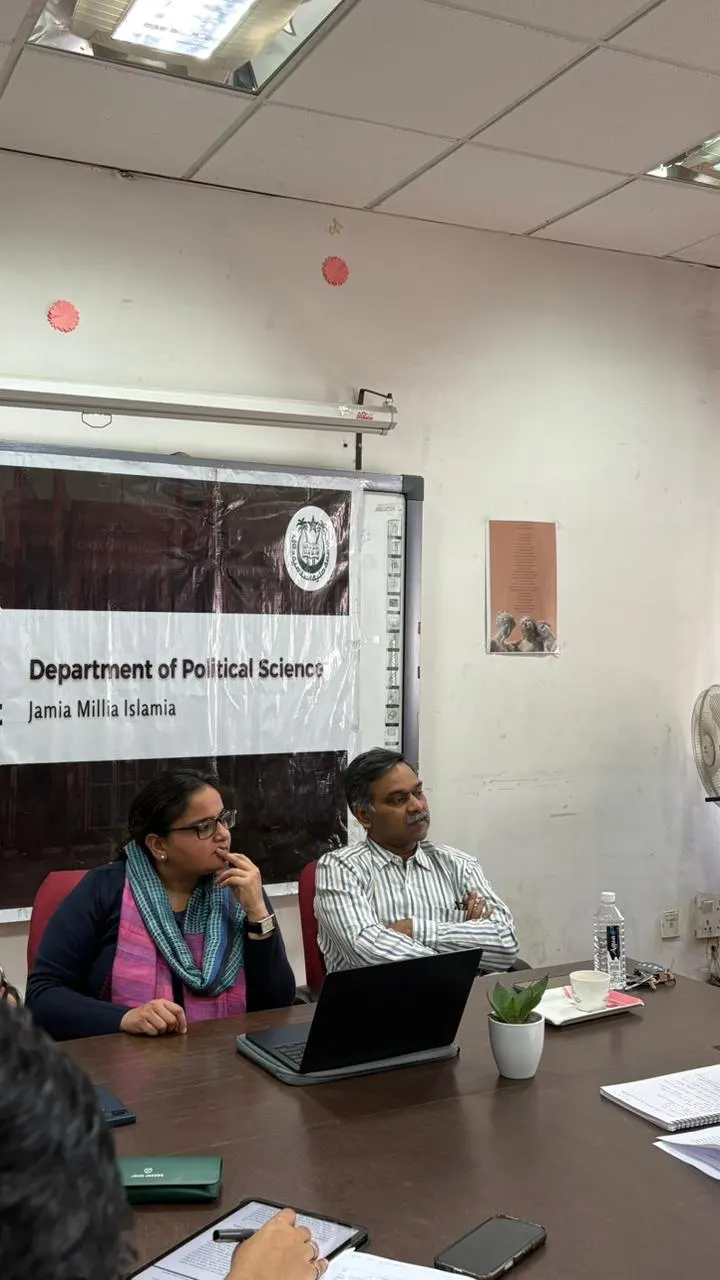
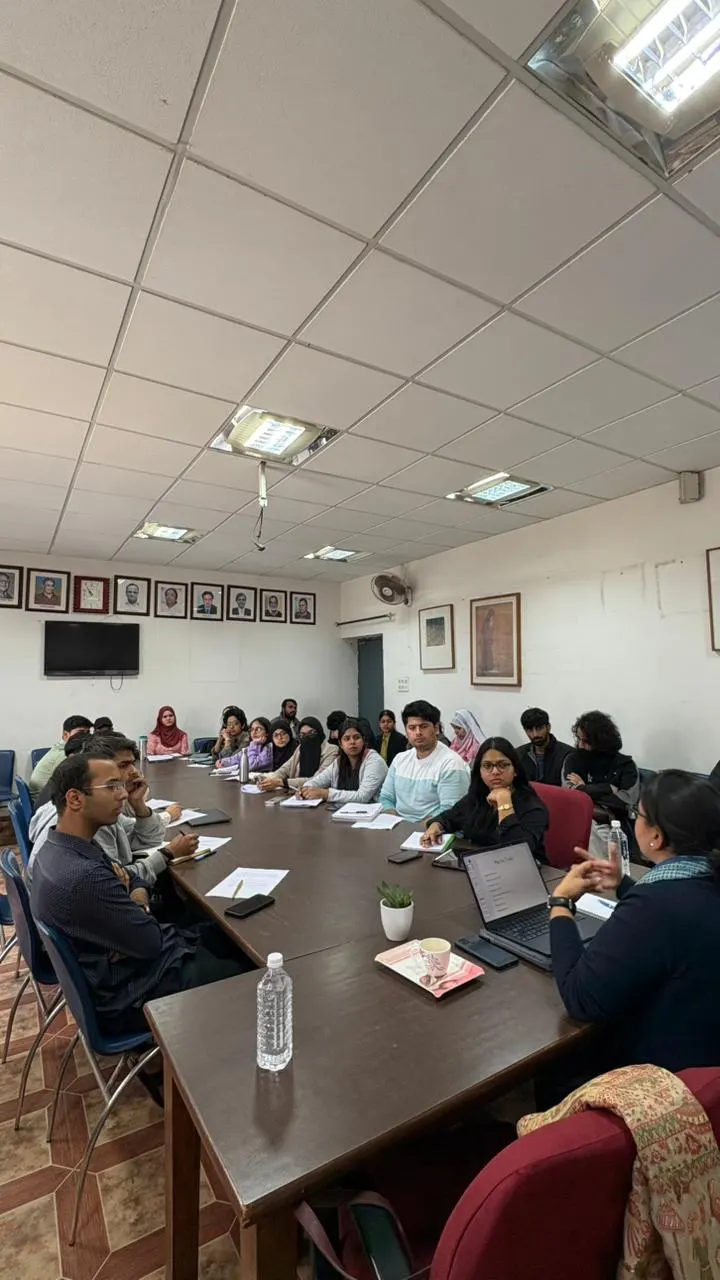
MN Meenai Seminar Room, Department of Political Science, Jamia Millia Islamia
About the workshop
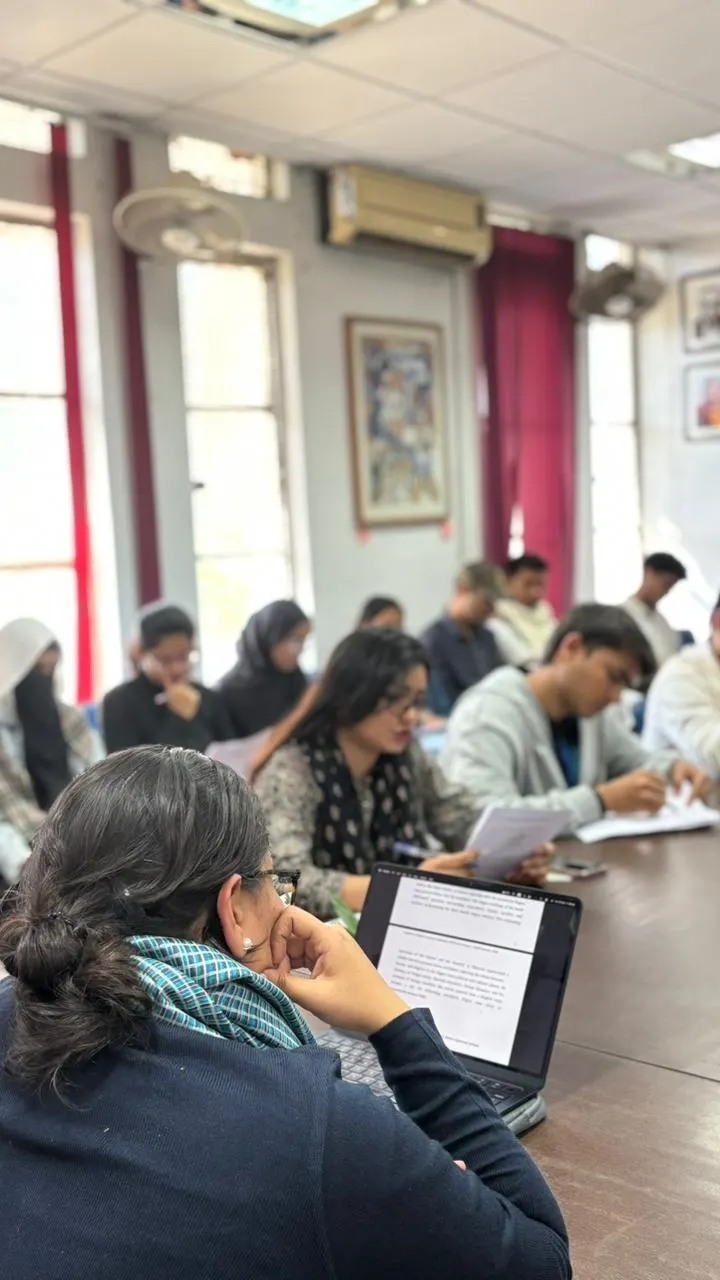
The workshop was part of the Episteme lecture series of the Department of Political Science, Jamia Millia Islamia. It was held on 13 February 2026, from 10:00 am to 12:00 noon, in the MN Meenai Seminar Room, under the title “Academic Writing for Journal Publication”. It was designed for students, particularly at the MA and PhD levels, who want to understand the evolving landscape of academic publishing and the practical skills needed to write and publish a journal article.
Dr. Shivani Kapoor of the Centre for the Study of Developing Societies (CSDS) combined historical background, a comparison of texts and open discussion.
The changing landscape of publishing
Dr. Kapoor began by explaining why publishing has become so pressing for early-career scholars. Around 2011 and 2012, the University Grants Commission (UGC) required PhD scholars to have two publications before submitting their thesis, a rule without precedent. Until then a PhD was an original submission that did not have to be published anywhere, and publishing was something done later in a career. The Academic Performance Indicator (API) then linked career progression directly to publication counts.
She placed these changes in a wider context: the “publish or perish” culture long familiar in American academia arrived in India alongside the privatisation of education and the growing weight of global university rankings. Accreditation bodies began to ask for publications, and journal articles overtook book chapters in importance. Today a scholar is increasingly measured by the H-index, a Scopus ID and a Google Scholar profile, and even central universities ask for these when recruiting.
Why the journal article is the gold standard
Peer-reviewed journal articles, book chapters, monographs, edited volumes, book reviews and popular writing are all forms of academic publication. The peer-reviewed article has become the gold standard, and its defining feature is length: usually 6,000 to 10,000 words including the bibliography and footnotes. Unlike a thesis or a book, an article must stand alone and still offer an original argument.
This is where most submissions fail. The biggest mistake early-career scholars make is to try to fit their whole thesis into one article. An article should be organised around a single narrow data point, such as one event, one character, one election or one village, through which it speaks to larger theoretical questions.
From thesis to article
To show the difference, Dr. Kapoor compared two abstracts by the same historian, Saurabh Ghosh. The first, for his PhD thesis on Rajput state formation under the Mughals, was expansive: it introduced the Rajputs, set out several research questions, listed sources in many languages and justified the study. The second, for his first journal article, focused on a single battle, the Battle of Dharmat in 1658, and used it to explore Rajput masculinity, loyalty and identity. The time frame shrank from more than a century to two years, and within that to one day. The argument was stated up front and the sources were selective, not exhaustive.
The lesson was that a journal article is not a compressed thesis. It is a specific argument anchored in specific evidence, with the same theoretical concerns seen through a narrow empirical lens.
Choosing where to publish
Journal selection, she said, is a strategic decision that starts with reading a journal’s aims and scope, which are on its website. Some journals say plainly what they will not publish, and a mismatch means an immediate desk rejection. She suggested weighing five things:
- Fit: does the journal publish work in your area? Read recent issues to see.
- Audience: an Indian policy audience, or an international disciplinary one.
- Turnaround time: how many issues the journal publishes in a year.
- Language and indexing: publishing in Indian languages is a valid choice, though it may limit Scopus indexing.
- Special issues: for first-time authors, special issues are less intimidating because editors guide a group of articles through review.
She also introduced H-Net, a set of hundreds of discipline-specific mailing lists that carry calls for papers, conference announcements and funding opportunities.
How peer review works
Dr. Kapoor walked through the usual stages: desk review, review by an area editor, double-blind review by two anonymous experts, revisions, and finally copyediting and production. She encouraged students to see peer review as a constructive process, since good reviewers suggest new readings and sharpen arguments, and many scholars have found some of their best sources through reviewer comments. She added that reviewing carries an ethical duty to be empathetic, constructive and fair.
She also warned about predatory journals. Warning signs include asking authors for money, promising publication in a few weeks, an editorial board unrelated to the subject, or no proper website. Publishing in them ends up harming a CV.
Citation and visibility
In her closing remarks, Dr. Kapoor advised students to create and regularly update their Google Scholar, Scopus, ORCID and ResearchGate profiles, and to share their published work with anyone who asks, especially scholars at under-resourced institutions without journal access. She also asked them to think about citation politics: whether they cite only the most visible scholars, often Western, male and English-speaking, or make a conscious effort to cite women, scholars of colour, Adivasi scholars and those who write in regional and non-English languages. Online tools now exist to audit a bibliography for gender and racial diversity.
Discussion and a closing exercise
The workshop ended with a question and answer session on structuring articles, handling academic language, and balancing the pressure to publish with the wish to do meaningful research. Dr. Kapoor left participants with a simple exercise: look at your own bibliography, find the journals where the authors you read publish most often, read their aims and scope, and try writing a narrow, focused abstract anchored in one piece of evidence from your own work. That, she said, is the first step from a student thesis to a publishable journal article.