Obligation to Obey a State: Struggle and Political Disobedience
16 November 2026, 3 pm · Ishika Saxena, ICT Instructor, Undergraduate Writing Program, Ashoka University
M. N. Meenai Seminar Room
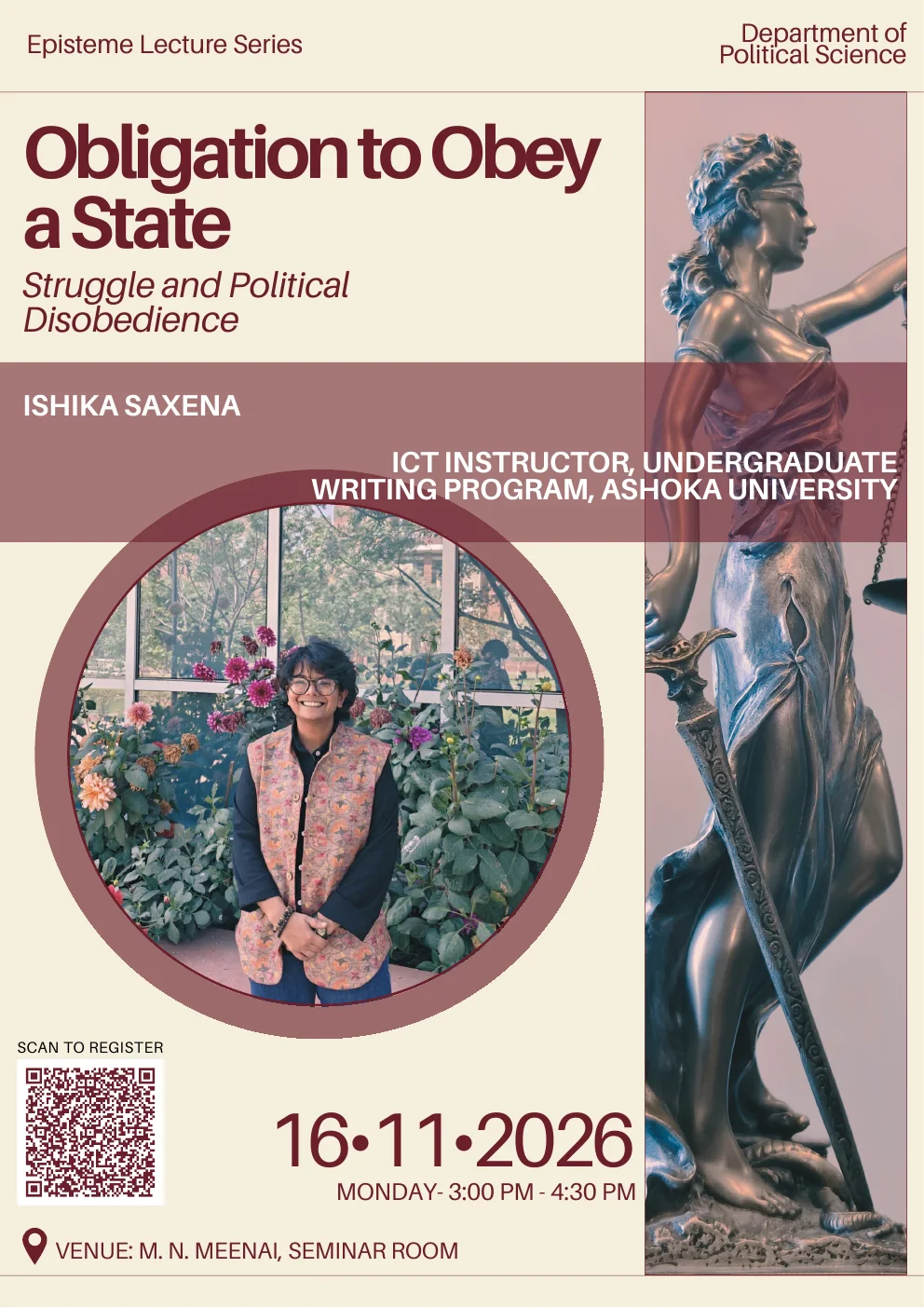 (view the poster larger, opens in a new tab)
About the lecture
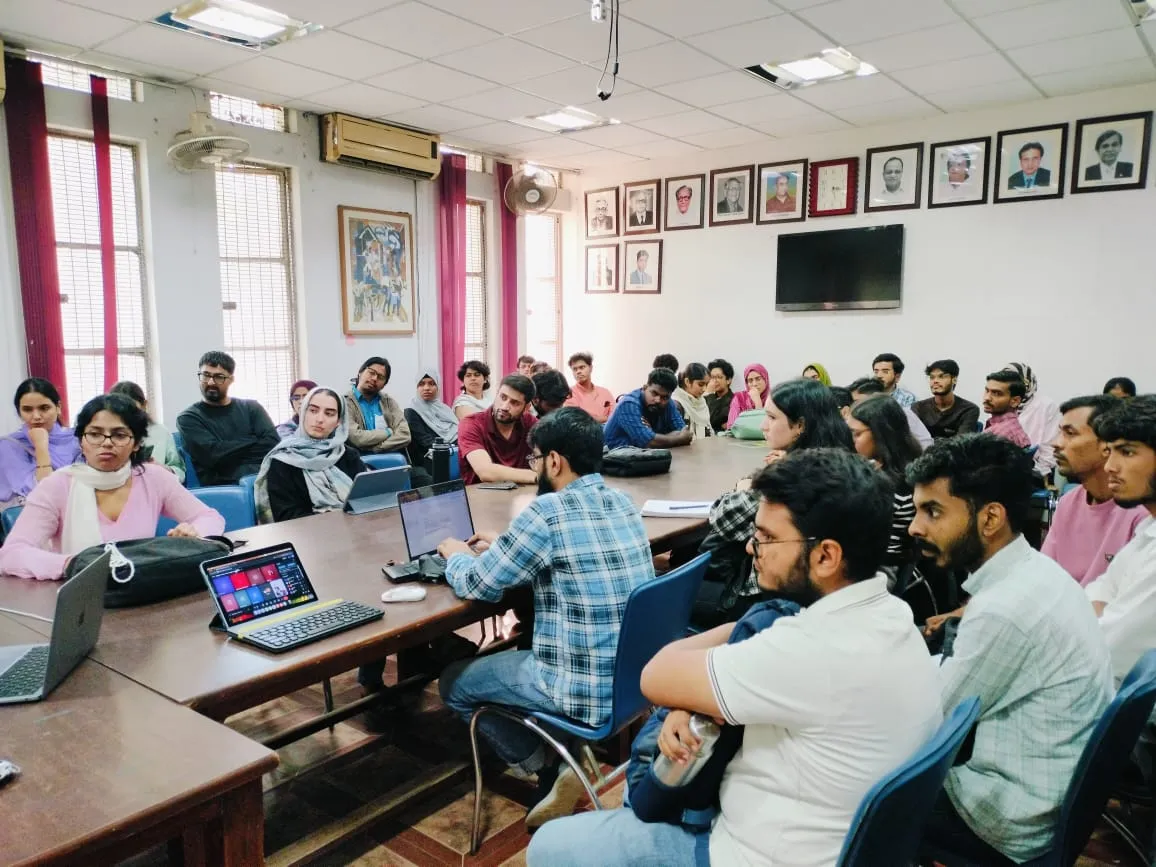
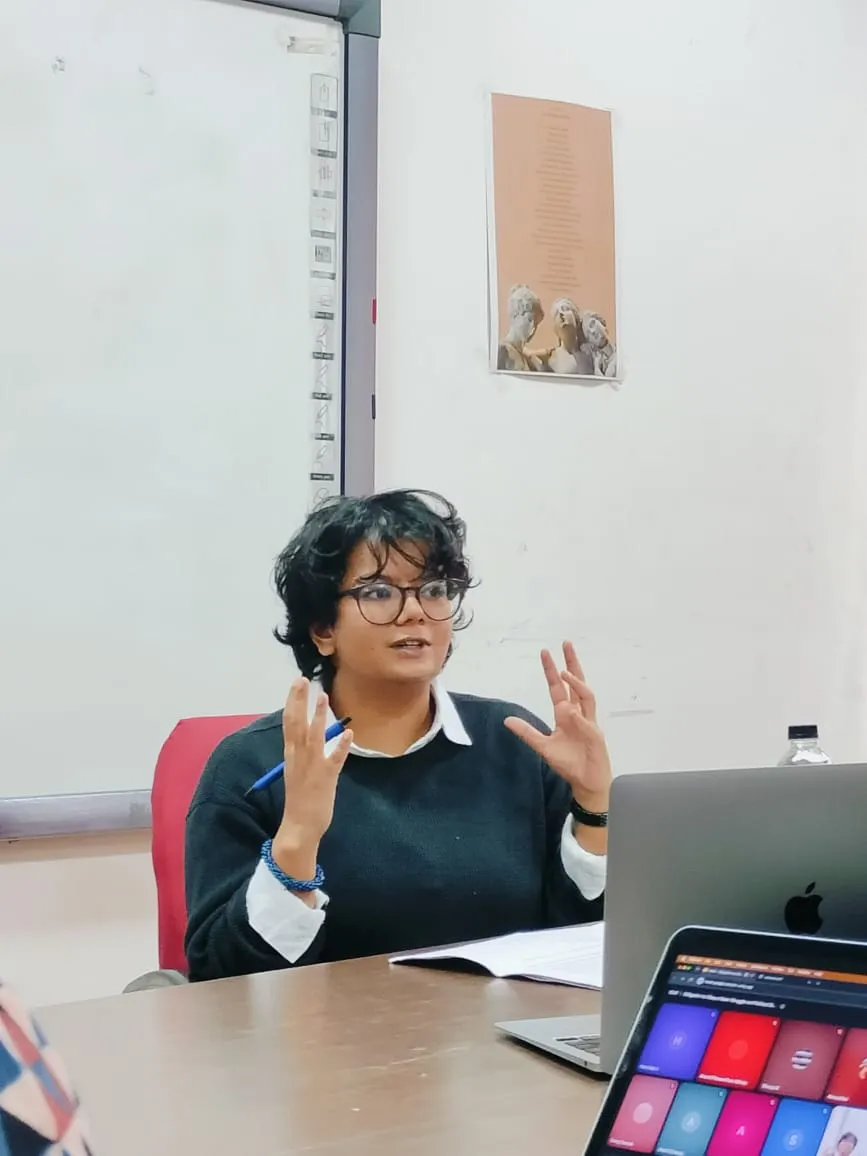
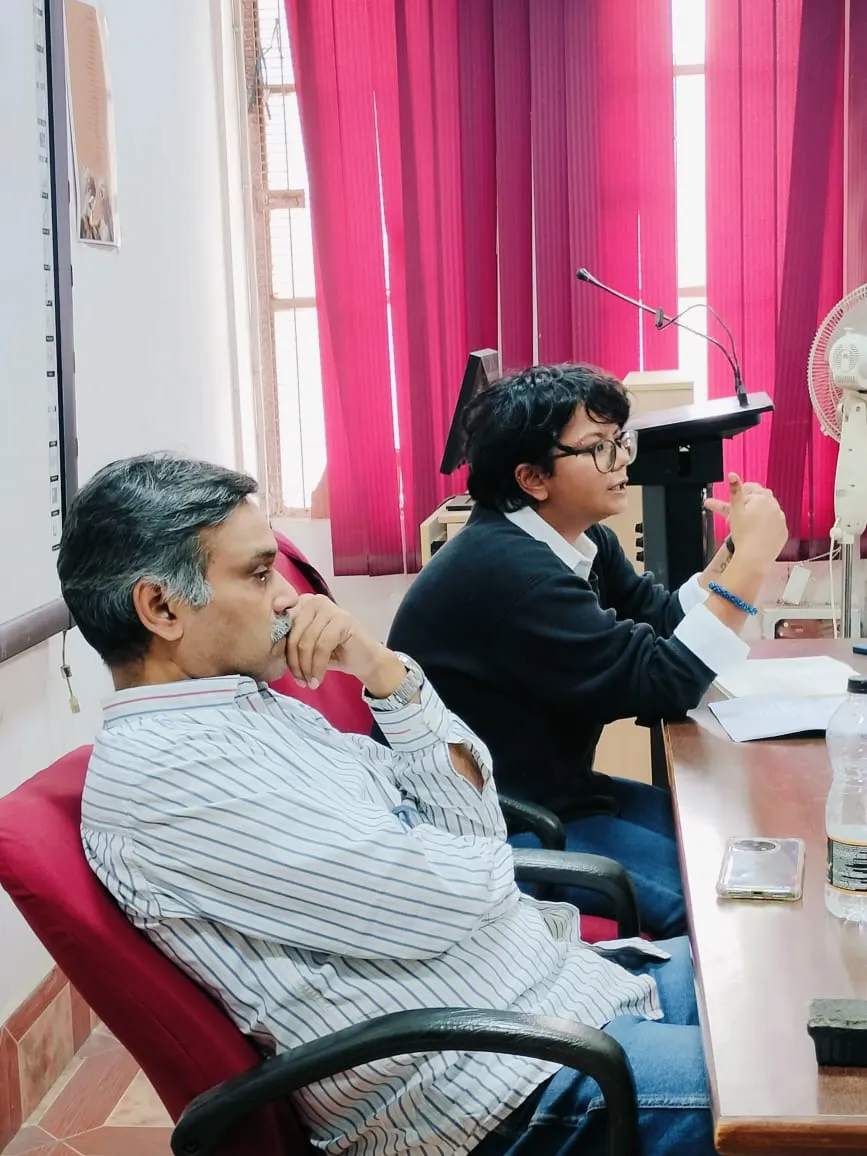
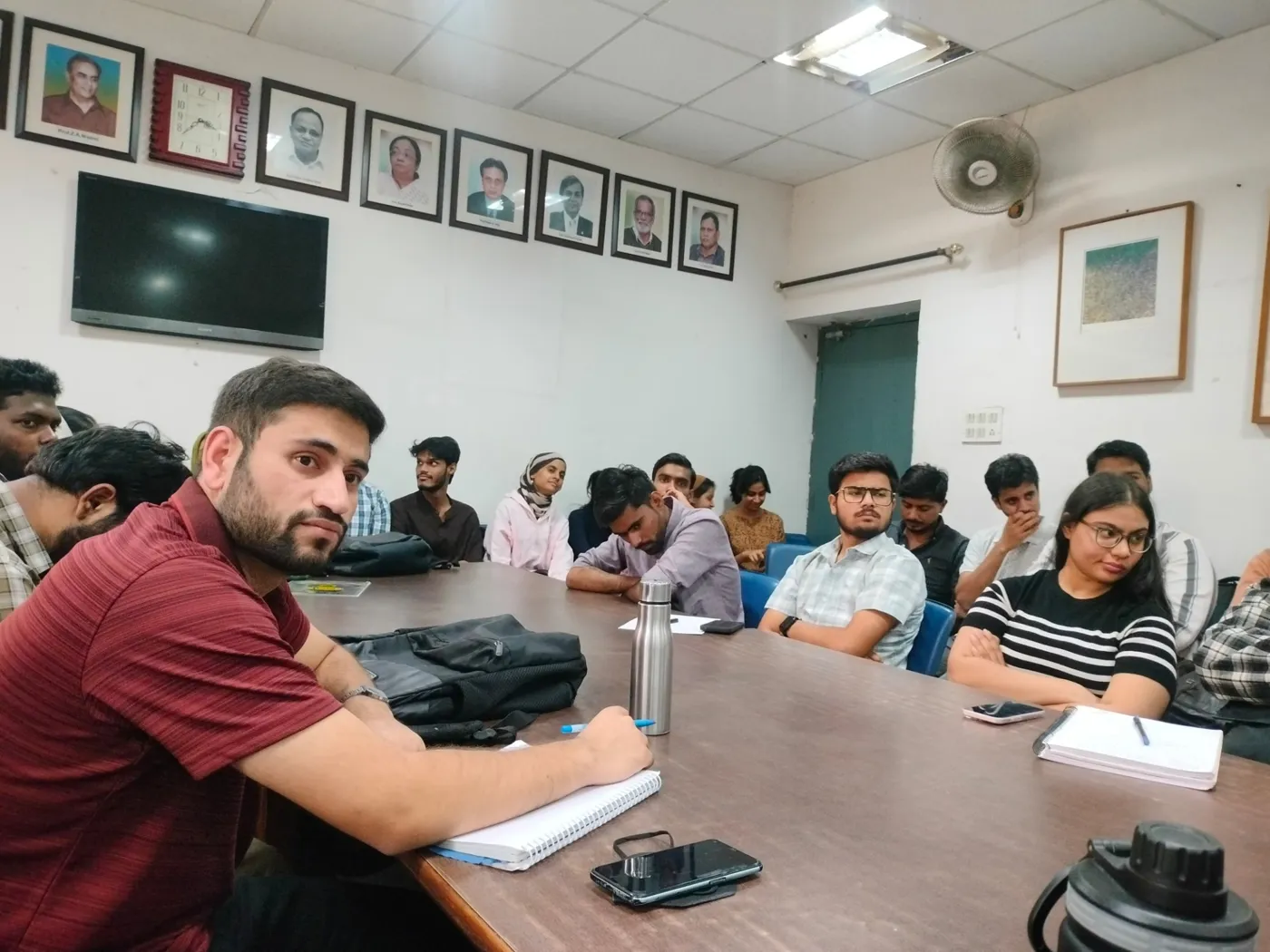
The first lecture in the Episteme Lecture Series of the Department of Political Science, Jamia Millia Islamia, was held on Monday, 16 November 2026, from 3:00 to 4:30 pm, in the M. N. Meenai Seminar Room and online. The speaker was Ishika Saxena, an instructor in the Undergraduate Writing Program at Ashoka University, where they teach a foundational course on critical theory. They hold an MA in Postcolonial Studies from SOAS and have taught political theory at the National Law School of India University, the Tata Institute of Social Sciences and the Symbiosis School for Liberal Arts. Their title was Obligation to Obey a State: Struggle and Political Disobedience.
The editors introduced the series as an effort to bring more abstract, theoretical questions to students, alongside the concrete ones the magazine usually takes up. Episteme itself began in May 2013 as a student publication of the department, paused during the pandemic and returned in 2023.
Political and moral obligation
Saxena began by separating two kinds of obligation. Political obligation is shared by citizens under a common state. Moral obligation is what human beings owe each other simply because they are human. Their example: the duty not to kill is moral, while the duty to follow a traffic rule is given to us by the state.
Political obligation, they stressed, runs both ways, between citizens and also between citizens and the state. The social contract is built on reciprocity, like any promise or deal. If the state does not keep its side, the contract is voided. Reading from Locke’s Second Treatise, they showed how people give up their natural power in exchange for protection and stability, and how this differs from rights such as the right to vote, which exist only because political institutions do.
They also pointed to the older idea of practical wisdom, from Aristotle and Aquinas, by which moral duties become self-evident through reason applied to a situation, without needing a fixed list of commandments.
What the social contract leaves out
The classical contract has been criticised from several directions. Carol Pateman’s “sexual contract” argues that the political contract rests on a prior agreement about gender and family authority, which leaves women and gender minorities out. The “racial contract” argues that groups such as enslaved African Americans were excluded from making the contract at all. A contract that people did not enter freely and on equal terms, they noted, cannot bind them in the same way. A further objection is that the contract is a thought experiment, not real history.
When the state breaks its side
For Locke the state’s only duty was to protect life, liberty and property. Today we expect much more: health, education, employment, shelter, the protection of minorities, and the conditions in which people can realise their capabilities, as Amartya Sen argues.
Saxena drew on the political philosopher Tommie Shelby’s book Dark Ghettos, which argues that crime in poor Black communities is produced by deprivation and systemic racism. Shelby distinguishes the “hustler”, who acts out of deprivation, from the “gangster”, who is genuinely immoral. His point is that political obligation may break while moral obligation does not. To say otherwise would be to treat people from marginalised communities only as victims without agency.
To judge when the break has happened, they offered three tests: Rawls’s idea of “tolerable injustice”, under which constitutional essentials can be secure while socioeconomic injustice deepens; Shelby’s two forms of injustice, where institutions fail a sound constitutional standard or where the standard itself serves the ruling elite, as when Adivasi communities are “modernised” against their will; and the case of communities left out of the making of the state altogether.
The state as unjust: anarchist and Marxist critiques
Some thinkers hold that the state cannot simply be reformed. Saxena read from Peter Kropotkin’s Law and Authority, which describes state-making as a process in which the rich and strong imposed their will, and argues that societies think about their needs only in the state’s language and that punishment does little to reduce crime. They turned next to Engels and Lenin, for whom the state emerged to manage class antagonisms, not to reconcile them. They also described the abolitionist tradition, which grew out of the movement against slavery and today appears in movements such as Black Lives Matter, and which sees the abolition of the carceral system as a first step toward equality.
Constitutions, fraternity and the Adivasi question
Saxena contrasted the South African Constitution, a forward-looking document that belongs to “all who live in it”, with the Indian one, which they suggested is best understood through the Constituent Assembly debates and Ambedkar’s writings. Reading from Ambedkar’s last speech to the Assembly, they recalled his warning that political democracy cannot last without social democracy, and that without fraternity, equality and liberty remain superficial. Caste, he argued, is anti-national because it breeds separation, jealousy and apathy.
They then turned to the Adivasi community, whose representation and concerns were poorly heard in the Constituent Assembly. They cited Jaipal Singh Munda’s plea that Adivasis, long dispossessed by newcomers, needed real protection and not formal safeguards, and the case of Father Stan Swami, who faced an FIR over Facebook comments supporting the Pathalgari movement in Jharkhand and died in custody in the Bhima Koregaon case.
Duty, resistance and rebellion
How and why do people keep resisting when hope runs low? Saxena described Shelby’s “duty of justice”, a duty to support just institutions and help others, and his “duty of self-respect”, a duty to defend one’s own dignity. Without fraternity, they said, democracy decays into the tyranny of a self-interested majority. Reading from Albert Camus, they contrasted resentment, which is passive and envious, with rebellion, which breaks inertia and lets the oppressed claim recognition for who they are.
Discussion
The conversation that followed ranged widely.
- Existentialism and Marxism. Existentialism starts from individual selfhood and moves toward collective action, whereas Marxism starts from the collective. Traditional Marxism struggles with caste and gender unless it is read through Mao’s idea of situated contradictions.
- Criticising the Constitution. Criticism of the Indian Constitution is politically sensitive today. Ambedkar himself saw it as a thin coat of paint over a broken society. Quoting Milan Kundera, they said the struggle of man against power is the struggle of memory against forgetting, and that unlike South Africa, Indian lawmaking tends to forget its past. Participants also noted how academic attitudes moved from the Marxist rejection of the Constitution in the late 1990s to an uncritical reverence for Ambedkar, a kind of worship he himself warned against.
- Resistance and solidarity. Individual resistance by minorities is quickly quelled, so collective action through unions and cross-organisational solidarity matters. Marginalised groups also have rich reading cultures, such as labour groups reading Marx, Lenin and Mao in Hindi and Haryanvi, which outsiders often do not notice. Movements are often taken over by dominant groups who sideline the people who built them, and internal democracy before, during and after a movement is the best safeguard.
- Conflict regions. In places such as Jammu and Kashmir and Assam, political obligation breaks down when a state violates the contract without consent or representation, though moral obligations to all human beings remain. Insurgent groups can themselves lose their moral standing by choosing endless war over negotiation.
- Dissolving the contract. When a state fails to protect its citizens, they may withdraw consent, as Locke argued. Collective civil disobedience within a constitutional framework is distinct from extra-constitutional revolt, and Ambedkar called routine disobedience in a working democracy the “grammar of anarchy”.
- Why the distinction matters. Ideally law reflects morality, so moral obligation would be contained in political obligation. The separation is useful for identifying the moment when citizens withdraw consent from an unjust state, and because states are historically unjust creations, the duty to pursue justice is a moral obligation that no state mediates.
Closing
A participant gave the vote of thanks, drawing together the lecture’s main threads: political against moral obligation, Shelby’s account of the ghetto, and the warning about democracy without fraternity.
Taken together, the afternoon traced one argument. Political obligation is a bargain that binds only while the state keeps its side, and it can break through exclusion, deprivation or coercion. Moral obligation does not break, which is why the duty of justice and the duty of self-respect remain even when the state has failed. Struggle and disobedience, whether within or outside a constitution, follow from that break. What sustains them, Saxena suggested, is fraternity, memory and solidarity, and the internal democracy of the movements themselves.